
Trade Compliance · 2026 Update
Recent Customs Updates Affecting Data Center Equipment Imports in 2026

Between February and May 2026, several customs and trade compliance changes were issued across markets that matter for global data center, telecom and ICT infrastructure projects. This article covers the practical implications for import planning, Importer of Record structure and post-clearance documentation.
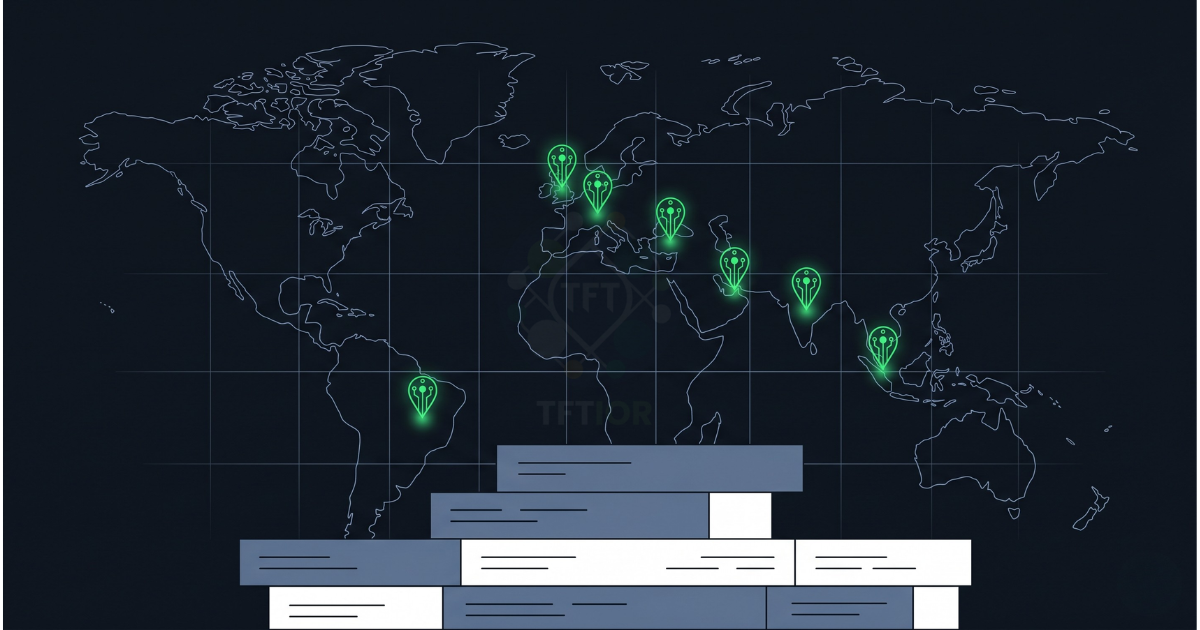
- Brazil's REDATA framework may support tax suspension for qualifying data center and ICT infrastructure projects, but eligibility must be assessed before shipment planning begins.
- India introduced deferred customs duty for eligible manufacturer importers, which can improve cash flow on large-scale data center deployments.
- The EU and UK are tightening sanctions, re-export controls and technology transfer expectations, particularly where high-value ICT infrastructure may route through third countries.
- Turkey and the UAE issued process-level updates affecting declaration correction windows, digital authorization and signer responsibility.
- Singapore's certificate of origin update is lower risk but relevant for companies using Singapore as a regional distribution or re-export hub.
- The common pattern: customs compliance for data center imports is moving beyond basic clearance into pre-import governance, sanctions screening, digital authorization management and post-clearance evidence control.
Data center deployments do not fail only because of freight delays. In regulated markets, the real risk often appears before the shipment moves: customs classification, import tax exposure, sanctions screening, end-user documentation, digital customs authorization and post-clearance evidence.
Not every update discussed here is a direct "data center regulation." Each one, however, can affect how servers, storage systems, network equipment, power modules, cooling components, spare parts or related technology are imported, re-exported or documented. Importers and Importers of Record operating across these markets should review each update before the next shipment cycle.
1. Brazil: REDATA Creates a Major Tax and Customs Planning Opportunity for Data Center Projects
Brazil
Brazil's Lei Complementar 228/2026 preserved and formalized the REDATA framework for data center infrastructure. For qualifying projects, the regime may allow suspension of certain federal taxes and import-related charges for specific information and communication technology products used in data center operations.
For data center investors, OEMs, integrators and deployment partners relying on Brazil IOR services, this is one of the most important import-related developments of 2026.
The practical impact is not simply "lower tax." The real operational issue is eligibility. Companies planning to import servers, storage systems, networking hardware, power equipment, cooling-related components or other ICT infrastructure into Brazil should evaluate whether the equipment and the project structure can qualify under REDATA before shipment planning begins.
If the import model, NCM classification, local eligibility analysis or project documentation is not aligned from the beginning, a company may lose access to a potentially valuable customs and tax benefit. This is a pre-import planning issue, not a post-arrival correction.
Why it matters for data center imports
Brazil is a high-complexity import jurisdiction where classification, local tax treatment and eligibility analysis can materially change landed cost. REDATA makes early customs planning more important, not less. Importers should not wait until the freight booking stage to review tax treatment.
Recommended action
- Review NCM classification for each equipment category before shipment planning
- Confirm whether goods fall within eligible ICT product categories under REDATA
- Assess whether domestic production restrictions apply
- Evaluate project-level eligibility and local importer or IOR structure
- Document the evidence required to support future customs and tax review
2. India: Deferred Customs Duty for Eligible Manufacturer Importers
India
India's Central Board of Indirect Taxes and Customs (CBIC) issued Circular No. 08/2026-Customs, introducing deferred payment of customs duty for eligible manufacturer importers from 1 April 2026 to 31 March 2028.
Data center deployments often involve large CAPEX shipments, including servers, storage arrays, switching equipment, UPS systems, cooling components and power distribution equipment. Even when the customs procedure is clear, immediate duty payment creates significant cash flow pressure.
For imports into India, the deferred payment model does not remove compliance requirements. It is available only to qualifying importers and depends on eligibility conditions such as importer profile, IEC and GST registration status, compliance history and transaction volume.
Why it matters for data center imports
Customs duty timing can be as important as customs duty rate for high-value infrastructure projects. Deferred payment may improve project cash flow, but only if the importer structure is eligible and correctly documented. This is particularly relevant where the foreign company has no local entity and relies on a non-resident importer of record or structured IOR arrangement.
Recommended action
- Confirm whether the local importer qualifies as an Eligible Manufacturer Importer under CBIC Circular No. 08/2026
- Verify IEC and GST status and compliance history
- Assess import volume and whether the deferred model can be used without increasing audit exposure
- Determine whether the project requires a local manufacturer importer model or a third-party IOR structure
3. India: Return, Reject and Re-Import Simplification for Courier Movements
India
India also published a March 2026 update covering return-to-origin, rejected goods and simplified re-import handling for certain courier-based movements.
This matters most for operational continuity. Data center projects depend on small, urgent components: SSDs, line cards, NICs, control modules, power modules, transceivers and replacement boards. These items frequently move under RMA, warranty replacement or urgent spare part procedures. Where a failed or rejected part needs to return, be replaced or re-imported, customs friction causes disproportionate operational delay.
Why it matters for data center imports
The biggest shipment is not always the most urgent shipment. A small failed component can affect uptime, maintenance windows and SLA commitments. Any simplification around return, reject and re-import handling should be reflected in the local spare parts playbook.
Recommended action
- Record serial numbers before export or return
- Standardize warranty replacement documentation across all India-bound hardware
- Ensure courier and customs documents match original import records
- Retain return-to-origin and re-import evidence for audit purposes
- Align local consignee and importer instructions before dispatch
4. European Union: 20th Russia Sanctions Package Increases Re-Export and End-User Scrutiny
European Union
On 23 April 2026, the Council of the European Union announced the 20th sanctions package against Russia. The package includes stricter restrictions on additional entities and strengthens anti-circumvention controls.
This should not be read as a simple customs rule for data center imports. Its relevance is broader. Data center equipment, networking hardware, advanced computing infrastructure and related technology may involve supply chains that include EU exporters, third-country distributors, integrators, resellers, service providers or indirect end users.
For companies moving high-value ICT and AI hardware through multi-country routes, sanctions screening is now a core part of import planning. This applies equally to companies using EU Importer of Record structures and to those routing through the EU toward third-country destinations.
Why it matters for data center imports
Data center equipment can trigger sanctions and export control sensitivity even when the import destination is not sanctioned. Risk can arise from end-user identity, third-country routing, distributor or reseller involvement, re-export potential, technology transfer, remote support or software access, or dual-use and advanced computing characteristics. Customs clearance alone is not sufficient. The importer must assess whether the shipment, route, buyer, consignee or end user creates sanctions exposure. For shipments where classification or end-use is uncertain, the dual-use compliance framework should be applied before cargo is committed.
Recommended action
- Strengthen end-user screening across the full supply chain, not only the declared consignee
- Apply due diligence to third-country distributors, resellers and intermediaries
- Review re-export risk for any equipment that may move onward from the initial destination
- Conduct entity list checks against EU, US and UN consolidated lists
- Review export control classification for servers, switches, storage and GPU hardware
- Include restricted destination and restricted party language in commercial contracts
5. United Kingdom: OTSI Takes a Larger Role in Trade Sanctions Licensing
United Kingdom
The UK updated its sanctions licensing guidance, confirming that from 27 April 2026, the Office of Trade Sanctions Implementation (OTSI) has responsibility for licensing certain trade sanctions activities involving goods and technology that are not subject to strategic export controls.
For technology companies, this creates a more complex distinction between strategic export controls and trade sanctions licensing. Data center-related projects often involve not only physical equipment, but also software, remote access, technical support, firmware, updates, monitoring tools and enterprise technology services. These flows may carry licensing implications where a UK nexus exists.
Why it matters for data center imports
A data center project may involve UK-origin technology, UK-based service providers, UK contractual control or UK personnel. Even if the physical import takes place in another country, licensing responsibility may still need to be reviewed under OTSI. This is especially relevant where equipment, software or services touch Russia-related restrictions or other sanctions-sensitive jurisdictions.
Recommended action
- Map UK nexus exposure across physical hardware exports, software, firmware and remote support
- Identify whether OTSI licensing applies separately from strategic export control authorizations
- Review reseller and distributor structures for UK-origin technology
- Confirm sanctions licensing requirements before signing service and support agreements
6. United Kingdom: General Trade Licence Extended for Russia Sectoral Software and Technology
United Kingdom
The UK extended the General Trade Licence for Russia sanctions covering sectoral software and technology. The updated licence took effect on 1 April 2026 and is valid until 30 October 2026.
This does not mean unrestricted movement of technology. It means certain activities may continue under defined licence conditions. For data center operators and technology vendors, software, support tools, systems management platforms and technical updates are often embedded into hardware lifecycle operations, making this directly relevant.
Why it matters for data center imports
Data center compliance is no longer only about the server, switch or storage unit at the border. It also includes the technology layer around the equipment: firmware patches, remote monitoring, software licences, maintenance access and vendor support portals. Where a UK nexus exists, companies should review whether these activities fall within the general licence, require a specific licence or are prohibited entirely.
Recommended action
Maintain a licence matrix covering: hardware, software, firmware, maintenance and patching, remote support, end-user access and restricted territory exposure. Review before 30 October 2026 for renewal or replacement.
7. Turkey: HGBS Declaration Correction Process Updated
Turkey
Turkey's Ministry of Trade updated the HGBS circular process for declarations. The update allows certain registered declarations to be withdrawn before customs approval or returned for correction after approval through administrative request mechanisms. The effective date was updated to 4 May 2026.
For data center and telecom equipment imports into Turkey, this matters most in air cargo scenarios. Urgent server parts, network components and replacement equipment often move quickly, and declaration errors create unnecessary delay in a market already subject to BTK authorization requirements, TAREKS product scope checks and CE/TSE conformity controls.
Why it matters for data center imports
Turkey is a regulated import market for many technology categories. Data center shipments may trigger HS classification review, TAREKS scope analysis, telecom-related controls under BTK, CE/TSE documentation requirements or refurbished equipment restrictions. A small declaration mismatch can create delay even for urgent spare parts. The HGBS update does not eliminate compliance risk, but it can improve correction handling when a declaration issue is identified before the shipment is blocked deeper in the process.
Recommended action
- Update broker and IOR instructions to include pre-approval declaration review as a standard step
- Establish a correction request workflow and escalation route for post-approval declaration issues
- Ensure document consistency across invoice, packing list, AWB and technical description before submission
- Review HS classification and regulatory scope early, especially for servers, network appliances and power modules
8. United Arab Emirates: Dubai Customs Introduces UAE PASS Signature Requirements
United Arab Emirates
Dubai Customs issued Notice 10/2026, introducing UAE PASS-based signature requirements for customs declarations, requests and refund claims. The notice becomes effective on 10 May 2026.
For UAE data center projects, the customs issue here is not product classification. It is authorization control. Customs declarations must be signed by properly authorized individuals, and the relationship between the company, Dubai Trade account, Emirates ID and UAE PASS must be managed correctly.
Why it matters for data center imports
The UAE is widely used as a regional hub for technology distribution, data center infrastructure, telecom equipment and onward movement into the wider GCC and Middle East region. If customs signer authorization is not correctly configured, shipments and refund processes may face avoidable administrative friction. For companies that manage multiple shipments in parallel or rely on broker delegation, this is an internal control issue, not only a customs process issue.
Recommended action
- Review the authorized signer matrix and confirm UAE PASS account linkage for each authorized individual
- Verify Dubai Trade account access and Emirates ID details
- Review broker authority documentation and refund claim authorization
- Establish internal controls around who can sign customs submissions before the May 10, 2026 effective date
9. Singapore: Electronic Submission of Ordinary Certificate of Origin Applications
Singapore
Singapore Customs announced that ordinary certificate of origin applications will move toward full electronic submission by 1 August 2026.
This is not a high-risk customs change, but it is relevant for companies using Singapore as a regional IOR or distribution hub for ICT equipment. Data center hardware often moves through Singapore before reaching Southeast Asia, Australia, India or other regional markets. Origin documentation affects customs handling, customer documentation and downstream import evidence in recipient countries.
Why it matters for data center imports
The update mainly affects documentation discipline. Companies that still depend on manual origin certificate processes should move toward digital recordkeeping and internal approval controls before the August 2026 deadline. This is especially relevant for re-export operations where origin certificates support preferential tariff claims or customs classification in a destination country.
Recommended action
- Review the certificate of origin application process and confirm digital workflow readiness
- Establish digital archive controls for origin certificates and export documentation
- Align distributor documentation responsibilities with the electronic submission requirement
- Ensure re-export evidence is retained for downstream customs clearance in destination markets
What These Updates Mean for Data Center Import Planning
The 2026 customs environment shows a clear pattern. Regulators are not only changing duty rates or border procedures. They are increasing control over who imports, who signs, who benefits, who receives the goods, who can access the technology, and how post-clearance evidence is maintained.
For multi-country data center rollouts, this means import planning should cover significantly more than freight and customs broker coordination.
TFTIOR View: Customs Compliance Is Becoming an Infrastructure Risk
Data center expansion depends on power, connectivity, cooling and physical infrastructure. But customs compliance is also part of infrastructure readiness. A shipment can be technically ready, commercially approved and operationally urgent, yet still fail because the importer structure, customs declaration, tax treatment, sanctions screening or local authorization was not prepared correctly.
The recent updates in Brazil, India, the EU, the UK, Turkey, the UAE and Singapore show why companies should treat import compliance as an early project workstream, not a last-minute logistics task. The pattern across all nine updates is consistent: regulators are raising the evidentiary and authorization standards required to move technology equipment across borders.
That is where an Importer of Record and Exporter of Record (EOR) model becomes relevant. A properly structured IOR/EOR arrangement helps foreign companies import regulated technology equipment without creating unnecessary local entity exposure, while maintaining control over customs liability, documentation, compliance review and post-clearance traceability. For companies managing deployments across multiple markets, a multi-country IOR approach with consistent pre-qualification discipline produces better results than managing each jurisdiction separately.
The difference between an IOR provider that can support this level of compliance and one that cannot is not always visible in a capabilities document. See our guide to IOR due diligence for the evaluation framework that distinguishes genuine importer responsibility from IOR-like marketing.
This article is based on official customs, tax and government sources published between February and May 2026. It is intended as general trade compliance intelligence for data center and technology equipment import planning. It should not be treated as legal, tax or sanctions advice. Project-specific classification, licensing, tax and importer responsibility should be reviewed before shipment execution.
Frequently Asked Questions
Which 2026 customs updates most affect data center equipment imports?
Between February and May 2026, the most commercially significant updates include Brazil's REDATA framework under Lei Complementar 228/2026, India's deferred customs duty model for eligible manufacturer importers, the EU's 20th Russia sanctions package with strengthened anti-circumvention controls, the UK's OTSI licensing expansion from April 2026, Turkey's updated HGBS declaration correction process effective May 2026, and UAE Dubai Customs Notice 10/2026 requiring UAE PASS signature authorization.
Does Brazil's REDATA framework automatically apply to data center equipment imports?
No. REDATA under Lei Complementar 228/2026 requires eligibility assessment before the shipment is planned. Companies must review NCM classification for each equipment category, confirm whether domestic production restrictions apply, establish project-level eligibility, and ensure the local importer or IOR structure is correctly documented. The benefit is conditional and requires advance preparation, not post-arrival application.
How does the EU 20th sanctions package affect data center equipment imports?
The 20th Russia sanctions package, announced April 23, 2026, strengthens anti-circumvention controls that apply to any company moving high-value ICT infrastructure through multi-country routes. Data center hardware can trigger sanctions sensitivity based on end-user identity, third-country routing, distributor involvement, re-export potential or dual-use characteristics. Customs clearance alone is not sufficient: the importer must screen the entire supply chain, not only the declared consignee at the destination border.
What is UAE PASS and why does it affect data center equipment imports through Dubai?
UAE PASS is the UAE national digital identity platform. Dubai Customs Notice 10/2026, effective May 10, 2026, requires that customs declarations, requests and refund claims be signed using UAE PASS-verified authorization. For companies importing through Dubai, the authorized signer must be correctly linked to the Dubai Trade account, Emirates ID and UAE PASS profile. Incorrect authorization configuration can cause avoidable delays even when the goods themselves are compliant.
Why do foreign companies need an Importer of Record for data center equipment?
Foreign companies typically cannot import regulated goods into another country without a local legal entity. An Importer of Record assumes legal, fiscal and customs responsibility in the destination market. For data center equipment, this is especially important because servers, networking hardware, GPU systems and telecom infrastructure often trigger product approval, classification review, sanctions screening or local certification requirements that a freight or brokerage model cannot address. See: IOR Liability and Risk Explained.
Planning a Data Center Import in 2026?
TFTIOR provides compliance-led Importer of Record and Exporter of Record services for data center equipment, servers, GPU and AI hardware, telecom infrastructure and regulated technology across 40 to 60 verified markets. Pre-qualification before cargo moves.
We assess every shipment before committing to it. If we cannot support it compliantly, we say so before your cargo moves. MERSIS No. 0859123223400001. SSHYB No. 84634.
Related Resources
TFTIOR (Transparent DIS TICARET LTD.STI.) is a globally operating Importer of Record and Exporter of Record provider with controlled IOR and EOR capability across 40 to 60 jurisdictions, subject to product and country feasibility review. MERSIS No. 0859123223400001. SSHYB No. 84634 (Ministry of Trade After-Sales Service Authorization). TS 12498 qualified. ISO 9001, 14001, 45001 certified under IAS, an IAF MLA signatory accreditation body. UK operations line: +44 330 533 0223. Updated August 26, 2026.