
Central Asia · Data Center & AI Infrastructure IOR
Central Asia Data Center Importer of Record for Server, Network and AI Infrastructure
Kazakhstan, Uzbekistan and Kyrgyzstan are taking on real weight in regional computing, connectivity and AI infrastructure planning. Moving the cargo across Eurasia is the part most teams already understand. The part that stalls projects is importer responsibility: who is the legal importer at the destination, and can the shipment clear under that structure before it leaves origin.
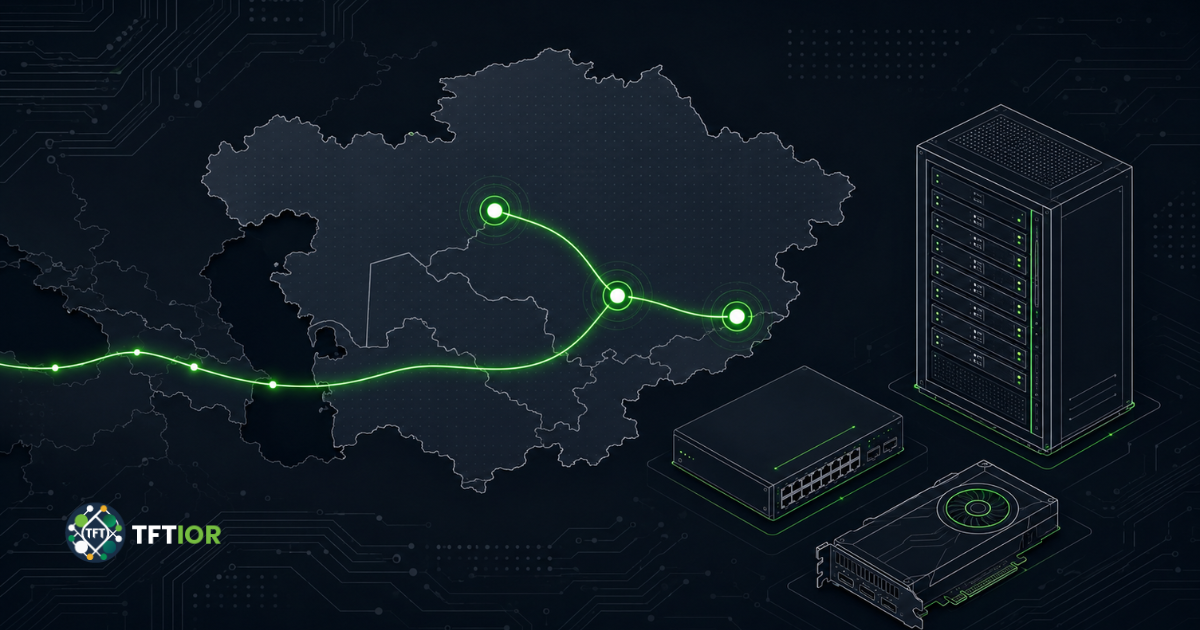
- A data center shipment into Central Asia is two problems, not one. Transport gets the cargo to the region. Import compliance decides whether it clears at the destination under a legal importer, with correct classification, valuation and documentation.
- The commercial plan is regional, but import responsibility is country-specific. A rollout across Kazakhstan, Uzbekistan and Kyrgyzstan cannot run as one generic Central Asia customs process. Each country needs its own importer validation and documentation.
- Kazakhstan and Kyrgyzstan are EAEU member states, so EAEU conformity considerations can apply to certain equipment categories. Uzbekistan is not an EAEU member and runs its own framework.
- GPU servers, AI accelerators and high-performance compute can carry export control exposure on the origin side. That screening belongs before the cargo moves, not at the destination border.
- Free-of-charge hardware still needs a customs value. Demo units, replacement parts and loaned equipment are not value-free in the eyes of customs.
- TFTIOR reviews every shipment for feasibility before accepting it. If a shipment cannot clear compliantly under a workable importer structure, we say so before the cargo is committed.
What Central Asia Data Center IOR Covers
A Central Asia data center Importer of Record is the legal party named on the customs import declaration in Kazakhstan, Uzbekistan or Kyrgyzstan, responsible for classification, duty and tax, regulatory compliance and the legal basis for bringing server, network, GPU and AI infrastructure hardware into the country. For technology companies with no local entity, that role is the difference between a shipment that clears and a shipment that sits at a terminal while storage charges run.
Data center imports into the region are rarely simple freight movements. A shipment can look operationally clean at origin and still become complicated once local authorities review the importer, the HS codes, the product descriptions, the declared value, the end use and the consignee structure. Servers, switches, routers, storage systems, PDUs, UPS units, telecom hardware, GPUs and AI components each raise their own customs, telecom, conformity, valuation or dual-use questions depending on the exact configuration and the destination country.
TFTIOR works on the compliance and importer layer, not the freight. Our job is to confirm whether the shipment can clear under a workable Importer of Record structure before cargo leaves origin, so the importability problem is caught at the planning stage instead of at a bonded warehouse.
Why Central Asia Matters for Data Center and AI Infrastructure
Central Asia sits between Europe, the Caucasus, China and the wider Eurasian transport network, and that position has turned Kazakhstan, Uzbekistan and Kyrgyzstan into destination markets rather than pure transit points. Cloud infrastructure, telecom expansion, enterprise IT, research equipment and AI-related compute are all landing in the region.
For operators and vendors, this creates a specific problem. The commercial plan is regional, but import responsibility stays country-specific. A deployment covering three Central Asian markets is three separate import events, each with its own importer validation, customs documentation, product classification and regulatory review. A Central Asia IOR model has to answer three questions before cargo moves: who is legally acting as importer in each destination country, whether the product descriptions, HS codes, values and technical files will hold up at that destination, and whether the route plan and the customs plan actually work together.
That review matters most when the cargo includes high-value server and network equipment, customer-owned hardware, free-of-charge units, temporary deployment assets or multi-country rollout shipments. These are exactly the shipment types where a freight consignee is least likely to be willing or able to act as the legal importer.
Route Planning and Import Compliance Are Separate Workstreams
Many infrastructure projects start with a logistics question: how does equipment move from Europe, Turkey, the UAE, China or another origin into Central Asia? That question matters, but it is only half the picture. A route can be available and the shipment can still fail if the importer structure is weak, the invoice does not match the intended customs model, the consignee cannot act legally, the technical documentation is incomplete, or the destination authority asks for product-specific evidence that was never prepared.
This is where a data center import needs more than a freight forwarder. A freight forwarder arranges transport. A customs broker submits declarations under instruction. An Importer of Record provides the legal import structure and coordinates the documentation basis under which the goods actually enter the market. For Central Asia, that distinction matters because the equipment is expensive, time-sensitive and difficult to reroute after arrival.
The Middle Corridor, also known as the Trans-Caspian International Transport Route, has made route planning easier across Eurasia by linking Asia, Kazakhstan, the Caspian Sea, the Caucasus, Türkiye and Europe through rail, sea and road. It answers how the goods move. It does not answer whether the goods can legally enter the destination country under the planned importer, invoice, product file and customs model. For data center projects, both answers are needed, and we treat them as connected but separate workstreams. The route detail lives on a dedicated page: Importer of Record Planning for Middle Corridor Technology Shipments.
Countries Covered in Central Asia Data Center IOR
TFTIOR's Central Asia footprint covers three destination markets. Each has its own role and its own import compliance structure, and the differences are not cosmetic.
Kazakhstan Data Center IOR
Kazakhstan · Anchor Market
Kazakhstan is the most commercially active Central Asian market for cloud, AI and data center infrastructure. Typical shipments include rack and blade servers, network switches and routers, storage arrays, PDUs and UPS systems, fiber and connectivity hardware, GPU servers and AI components, spare and replacement units, and research or laboratory technology. For these, the IOR review focuses on importer eligibility, customs valuation, product classification, technical documentation, end-use description and whether the cargo contains controlled or sensitive technology. Kazakhstan is an EAEU member state, so EAEU conformity considerations may apply to certain equipment categories. High-value IT hardware also needs serial-number accuracy and defensible valuation, since authorities may question values that look inconsistent with market pricing for comparable equipment.
Related: Kazakhstan Importer of Record · Kazakhstan Technology and Research Equipment IOR
Uzbekistan Data Center IOR
Uzbekistan · Growth Market
Uzbekistan is increasingly relevant for digital infrastructure, telecom expansion and regional technology investment. The key issue for foreign companies is that a local destination, customer or deployment site does not automatically solve importer responsibility. Unlike Kazakhstan and Kyrgyzstan, Uzbekistan is not an EAEU member and operates its own customs and regulatory framework, so EAEU conformity pathways do not carry over. Data center and IT infrastructure imports should be reviewed before dispatch for importer and consignee model, invoice and shipment purpose, HS classification, product description quality, telecom or wireless functionality, power-equipment documentation, end-user details and whether the goods are sold, leased, loaned, transferred or shipped free of charge. A clean IOR model removes the ambiguity between the commercial buyer, the deployment site, the freight consignee and the legal importer.
Related: Uzbekistan Importer of Record
Kyrgyzstan Data Center IOR
Kyrgyzstan · Connected Market
Kyrgyzstan is relevant for regional infrastructure, connectivity projects, smaller data center deployments, telecom hardware and technology distribution into Central Asia. Volumes run smaller than Kazakhstan or Uzbekistan, but the compliance discipline is the same. Common shipments include network and server hardware, telecom components, security systems, power and backup systems, IT spares and project-based infrastructure. Kyrgyzstan is an EAEU member, which creates shared conformity frameworks with Kazakhstan for certain product categories. Final-use and consignee clarity matter here especially, because the gap between who receives the cargo and who legally imports it is a frequent source of trouble in smaller markets.
Related: Kyrgyzstan Importer of Record
Equipment Categories and Import Profiles
Different technology categories create different compliance profiles. Which category a shipment falls into affects HS classification, documentation, approval workflows and the importer structure.
Server and compute hardware is usually high-value, serial-numbered and time-critical. The shipment may include complete rack servers, blade servers, AI servers, spare compute nodes, management modules or replacement units. Before dispatch, the importer needs product descriptions and model identification, HS classification, declared value with valuation support, country of origin, invoice purpose, end-user details, warranty or free-of-charge status, and a flag for whether the equipment includes GPUs or controlled technology.
Network and telecom hardware including switches, routers, firewalls, access points, optical modules, fiber equipment and security gateways adds complexity when it carries routing, switching, encryption, wireless, radio or telecom functionality. The review covers wireless or radio features, encryption, telecom or network approval exposure, product datasheets, end-use explanation and how the goods line up with local documentation expectations. In Kazakhstan and Kyrgyzstan, EAEU equipment certification frameworks should be checked, and the same physical product can carry different approval requirements in each country.
AI infrastructure and GPU hardware sits in a more sensitive category than standard IT cargo because it can include high-performance GPUs, accelerators, servers, storage and networking built for intensive compute. For these shipments TFTIOR reviews the GPU or accelerator model, server configuration, export control exposure, end-use description, destination and end-user profile, invoice and commercial structure, and import feasibility before shipment. This matters most when the cargo originates from a country with export control obligations, where the export side needs screening before movement. See: Dual-Use and Export Control Compliance and IOR and US Export Controls (EAR/BIS).
Power, cooling and rack infrastructure covers PDUs, UPS units, battery backup systems, rack cabinets, cooling components, structured cabling, monitoring devices and access control hardware. These goods carry their own classification, conformity and safety questions and should not be treated as generic accessories that ride along with the IT equipment.
Why Pre-Shipment Compliance Review Matters
The most expensive import problems show up after the shipment has already moved. At that point the cargo may be sitting at an airport, port, rail terminal or bonded warehouse, storage charges may be running, the customer may be waiting for installation, and the logistics provider may not be able to change the invoice or consignee structure. The local authority may also ask for documentation that was never collected from the manufacturer.
TFTIOR reviews the shipment before dispatch instead. A pre-shipment review for Central Asia data center imports normally checks the destination country, importer and consignee model, shipment purpose, the seller, buyer and end-user structure, commercial invoice, packing list, HS codes, product descriptions, declared value, Incoterms, country of origin, datasheets, certificates and technical files, dual-use or controlled-goods exposure, telecom, wireless or power-related requirements, and whether the goods are new, used, refurbished, demo, temporary, warranty replacement or free of charge. The review does not erase every possible customs question, but it removes the basic importability failures that would otherwise surface after cargo has moved. See also: Customs Valuation Risks in Technology Imports.
IOR, Customs Broker and Freight Forwarder
Central Asia data center imports involve several parties: the shipper, freight forwarder, customs broker, local customer, deployment partner, warehouse, installer and importer. These roles are not interchangeable, and confusing them is where shipments go wrong.
| Role | What it does | What it does not do |
|---|---|---|
| Freight forwarder | Arranges transport, carriers and multimodal routing into the region | Does not assume legal importer responsibility at the destination |
| Customs broker | Files customs entries based on instructions and documentation | Does not own the import compliance position or carry importer liability |
| Consignee | Receives the shipment or is named in transport documents | Is not automatically able or willing to act as legal importer |
| Importer of Record | Is the legal party responsible for the import declaration and compliance | Does not replace freight execution; coordinates the import structure |
For high-value technology infrastructure, the IOR role is the one tied to customs responsibility, document validity, regulatory exposure and the legal basis for bringing the equipment into the country. Put the wrong party in that seat and the shipment can face delay, refusal, document correction, additional questioning or re-export risk. For the full breakdown, see: Freight Forwarder vs Importer of Record and Importer of Record vs Customs Broker.
Non-Resident Importers in Central Asia
Many companies shipping technology hardware into Central Asia have no local legal entity in the destination country. A manufacturer may have a customer in Kazakhstan but no Kazakh subsidiary. A cloud provider may be deploying into Uzbekistan without a local registered company. A systems integrator may be supporting an installation in Kyrgyzstan with no local presence at all. In these situations, a non-resident Importer of Record structure may allow the company to import equipment without establishing a local entity, subject to destination-country rules, product scope and feasibility review. The model does not work the same way in every country, so foreign importer eligibility should be confirmed before the commercial structure is finalised. See also: Importer of Record vs Local Entity Setup.
Common Risk Scenarios in Central Asia Data Center Imports
The customer cannot act as importer. A foreign vendor may assume that its customer, reseller or installation site will import the equipment. In practice, the local party is often unwilling or unable to take that role, especially for high-value hardware, free-of-charge units, demo equipment or spares it did not purchase directly.
The invoice does not match the import model. Data center projects involve complex commercial structures. The seller, buyer, ship-to party, bill-to party, end-user and installation site may all differ. When the commercial invoice does not match the intended customs model, the shipment is delayed. A paper IOR that exists only on documents makes this worse.
Free-of-charge equipment is poorly documented. Cloud, AI, telecom and hardware companies ship free-of-charge units for testing, replacement, demo, evaluation or deployment. Free of charge does not mean value-free. Customs still requires a customs value, a shipment purpose and a documentation basis.
Product descriptions are too generic. "IT equipment," "server parts," "network device" or "electronics" are rarely enough for regulated technology imports. Data center shipments should be described with clear model, function and technical context.
Route is booked before import feasibility is confirmed. A shipment gets booked through rail, air, road or multimodal transport before anyone has confirmed whether the destination party can actually import the goods. That sequence creates avoidable risk.
High-performance compute is not screened for controls. GPU servers, accelerators and AI infrastructure should be reviewed for export control, end-use and destination sensitivity before movement. This is not a last-minute customs formality at the destination.
Recommended Workflow for Central Asia Data Center IOR
Cloud Infrastructure IOR Rollout Across 45 Markets
Central Asia rarely ships in isolation. It usually sits inside a larger multi-country program, where the same hardware lands in markets with different importer rules, conformity regimes and documentation standards on different timelines. Our documented rollout across 45 markets shows how a single importer model was held consistent while each destination kept its own compliance event, including Central Asian destinations alongside EMEA and APAC.
Read the 45-market rollout case study →How This Page Fits TFTIOR's Data Center IOR Cluster
This page is the regional hub for data center, cloud and AI infrastructure imports into Kazakhstan, Uzbekistan and Kyrgyzstan. For broader or more specific planning, these connect to it: Global Server and Data Center Equipment IOR, Cloud and AI Infrastructure Importer of Record, EMEA Data Center IOR, Southeast Asia Data Center IOR, End-to-End Global Data Center Import Deployment, Middle Corridor Importer of Record and IOR for Regulated Technology Global Deployments.
Why TFTIOR for Central Asia Data Center Imports
TFTIOR focuses on regulated technology imports where importer responsibility, documentation discipline and timing decide whether a project lands on schedule. Companies come to us because data center and AI infrastructure shipments need more than freight forwarding. They need a partner that understands how customs, product compliance, importer liability and project timing interact before cargo moves.
Depending on the project, our scope may include Importer of Record coordination, pre-shipment import feasibility review, server and data center equipment imports, cloud and AI infrastructure hardware, GPU and high-performance compute shipments, telecom and network equipment, multi-country deployment support, customs documentation review, consignee and importer structure planning, stuck-shipment recovery where feasible, and proof-of-delivery and project-closure documentation. The objective is to move critical infrastructure into Central Asian markets under a structured, compliant and commercially practical import model.
Pricing Factors
IOR coordination costs for Central Asia vary by destination country, product category, shipment value, duty structure, regulatory scope, required documentation, product approval exposure and importer structure complexity. EAEU conformity workflows in Kazakhstan and Kyrgyzstan add time and cost when they apply. TFTIOR provides project-specific cost assessment during the feasibility review stage rather than a fixed published rate.
Frequently Asked Questions
Do data center shipments into Central Asia need an Importer of Record?
Most data center shipments into Central Asia require a legal importer in the destination country. If the foreign shipper, local customer or named consignee cannot act as importer, an Importer of Record structure may be needed. This is frequently the case in Kazakhstan, Uzbekistan and Kyrgyzstan, where high-value server, network and GPU hardware is held to documentation and valuation standards that a freight consignee is often not prepared to meet.
Which Central Asian countries does TFTIOR support for data center imports?
TFTIOR supports IOR planning for Kazakhstan, Uzbekistan and Kyrgyzstan, subject to shipment details, product category, documentation and destination feasibility. This sits within a wider footprint across 40 to 60 operationally reviewed markets, subject to product type, importer feasibility and destination-country compliance review.
Can TFTIOR support server and network equipment imports into Kazakhstan?
Yes. TFTIOR supports Importer of Record planning for server, network, storage, telecom and data center equipment imports into Kazakhstan, including project-based and multi-country deployment scenarios. Kazakhstan is an EAEU member state, so EAEU conformity considerations may apply to certain equipment categories alongside customs valuation and classification review.
Are GPU and AI server shipments treated differently from ordinary IT equipment?
They can be. GPU servers, AI accelerators and high-performance compute equipment may require additional review for export control exposure, end-use, technical specification and destination sensitivity. When the cargo originates from a country with export control obligations, the export side of the shipment should be screened before movement, not at the border.
Is the Middle Corridor route enough to solve data center import problems in Central Asia?
No. The Middle Corridor helps with route planning across Eurasia, but it does not replace destination import compliance. Data center shipments still require importer responsibility, customs documentation, product classification, valuation review and country-specific import planning at the point where goods enter the market.
Can free-of-charge data center equipment be imported into Central Asia?
Free-of-charge equipment can often be imported, but it still needs a declared customs value, a stated shipment purpose and supporting documentation. Demo units, replacement parts, loaned hardware and evaluation equipment all require a valuation basis even when no money changes hands.
Should we contact TFTIOR before or after booking freight?
Before booking freight. Importer feasibility, documentation and product compliance should be reviewed before cargo moves, especially for high-value data center and AI infrastructure shipments. Once the invoice is issued and the cargo is in transit, the structure is much harder to correct.
Can TFTIOR support multi-country Central Asia deployments?
Yes. TFTIOR can review importer models and documentation planning for multi-country infrastructure deployments, including rollouts that involve Kazakhstan, Uzbekistan, Kyrgyzstan and connected regional routes. Each destination is treated as a separate import event with its own importer and documentation requirements.
What documents are usually needed for Central Asia data center imports?
Typical documents include the commercial invoice, packing list, product datasheets, HS code details, country of origin information, declared value support, end-use details and any product-specific certificates or technical files required for the shipment. EAEU conformity documentation may also apply in Kazakhstan and Kyrgyzstan for certain equipment categories.
Planning a Data Center Shipment into Central Asia?
Send us the destination country, equipment list, invoice value, equipment condition, consignee details and expected timeline. TFTIOR will review whether an Importer of Record structure is required and whether the shipment can be supported under a compliant import pathway, before your cargo moves.
We assess every shipment before committing to it. If we cannot support it compliantly, we say so before your cargo moves. MERSIS No. 0859123223400001. SSHYB No. 84634.
Related Resources
TFTIOR (Transparent Dış Ticaret Ltd. Şirketi) is a globally operating Importer of Record and Exporter of Record provider with coverage across 40 to 60 operationally reviewed markets, subject to product type, importer feasibility and destination-country compliance review. MERSIS No. 0859123223400001. SSHYB No. 84634 (Ministry of Trade After-Sales Service Authorization). TS 12498 after-sales service qualification for computers and peripherals. ISO 9001, 14001, 45001 certified under IAS, an accreditation body participating in international multilateral recognition frameworks including IAF MLA for management systems. UK operations line: +44 330 533 0223. Updated June 2026.