
Global Deployment · Importer of Record & Execution Model
End-to-End IOR and Deployment Support for Global Data Center Equipment Imports
Global data center deployments do not fail only because freight is delayed. They fail when importer responsibility is unclear, customs documentation is incomplete, product files are not reviewed before export, local regulatory exposure is missed, or equipment reaches the destination country before the import structure is ready. TFTIOR supports global data center equipment imports through a compliance-first Importer of Record and deployment model covering importer responsibility, customs coordination, regulatory screening, documentation control, staging and controlled delivery in active markets where importer liability can be properly assumed.
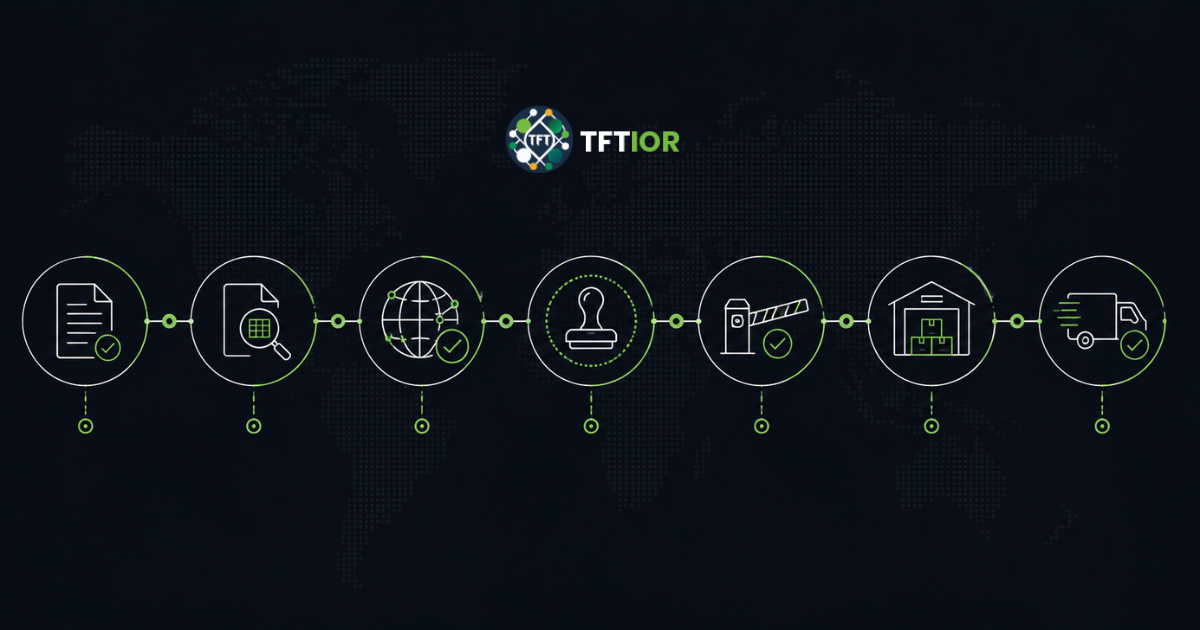
- Deployment failures in global data center projects are rarely a freight problem. They follow from unclear importer identity, incomplete documentation, unresolved regulatory exposure, or equipment arriving before the import structure is ready.
- TFTIOR's involvement starts before export. Pre-shipment review covers importer feasibility, product file screening, HS classification risk, regulatory exposure and documentation readiness before cargo is committed to movement.
- DDP delivery terms do not solve importer liability. Someone must legally act as importer, control the customs declaration, own the documentation trail and remain accountable for post-clearance audit exposure. Delivery to site is a logistics outcome; importer responsibility is a legal position.
- TFTIOR screens every shipment before accepting it. Shipments that cannot be executed compliantly are restructured, paused or refused before export. This is deliberate, not a service gap.
- Multi-country rollouts require country-by-country import planning. A regional logistics instruction does not replace market-specific importer review, regulatory screening and documentation preparation.
- TFTIOR supports IOR and EOR coordination across 40 to 60 active markets for data center, server, GPU, telecom and regulated technology equipment deployments. Updated May 2026.
Why Deployment Structure Determines the Outcome
Most deployment planning conversations start with freight: carrier selection, transit time, port routing, Incoterms. Those are real decisions that matter. But for regulated data center equipment moving across international customs systems, the freight plan is rarely where the project goes wrong.
What actually causes deployment failures is the control layer behind the shipment. Who legally imports the equipment. Who controls the customs declaration. Who reviews HS classification and product documentation. Who is accountable when customs authorities question the import file. Whether the shipment was properly screened before it left origin. A shipment can be physically deliverable and still fail to clear if the importer structure is wrong, the documentation is incomplete, or a regulatory requirement was not identified until the cargo was already at the destination port.
This page describes how TFTIOR approaches that control layer for global data center equipment imports, from the pre-shipment review stage through to controlled delivery and post-clearance documentation. It covers the end-to-end model itself: what gets reviewed at each stage, who is responsible for what, and how the import structure is confirmed before cargo moves. For equipment-specific depth, see our IOR for Servers and Data Center Equipment page. For regional coverage detail, see our guides for EMEA, LATAM and Southeast Asia.
What TFTIOR Covers
TFTIOR helps companies structure import-heavy technology deployments where customs, compliance, importer liability and delivery coordination must be managed together. This service is built for technology companies, OEMs, system integrators, cloud infrastructure teams, telecom vendors, data center operators and procurement teams moving servers, networking hardware, telecom equipment, storage systems, GPU infrastructure, spare parts and other high-value technology equipment across multiple countries.
Unlike generic freight forwarding or simple DDP shipping, TFTIOR focuses on the importer-side control layer behind the deployment. Our support may include:
- Importer of Record review and importer responsibility planning
- Destination-country import feasibility assessment
- Pre-shipment product and document review
- HS classification and customs risk screening
- Regulatory exposure review for servers, networking, telecom and IT equipment
- Customs declaration coordination through local execution channels
- Duties, taxes and importer-side exposure planning
- Exporter of Record (EOR) coordination where required
- Controlled release after customs clearance
- Staging and temporary storage coordination where available
- Delivery and handover coordination with qualified logistics partners
- Serial-number level documentation support where required
- Spare parts, RMA and replacement shipment handling
- Multi-country rollout coordination across selected active markets
- Priority handling and after-hours deployment support where operationally available
The objective is not only to move cargo. The objective is to make sure the import structure behind the deployment is legally clear, commercially usable and audit-ready.
Built for Data Center and Regulated Technology Imports
Data center shipments often involve equipment categories that require more than a standard import declaration. Even when the cargo looks like ordinary IT hardware, it may trigger country-specific controls, documentation requirements or conformity checks that a standard freight process does not catch.
TFTIOR is suited for shipments involving:
- Servers and rack-mounted systems
- Network switches and routers
- Firewalls and security appliances
- Telecom and wireless equipment
- GPU and AI infrastructure
- Storage arrays and backup systems
- UPS, power and infrastructure components
- Data center spare parts
- RMA replacement units
- Refurbished or used IT hardware
- High-value enterprise technology equipment
- Multi-vendor rollout shipments
- Multi-country infrastructure deployment programs
These shipments often require importer-side discipline before export. The invoice, packing list, product description, HS code, datasheet, conformity evidence, serial number records and intended use may all affect whether the shipment can be accepted in a given country. See our Importer of Record for Servers and Data Center Equipment page for equipment-category specifics.
When Companies Use This Service
This service is typically used when a technology company needs more than customs clearance and more than freight movement. The common requirement is a single import execution structure that connects IOR responsibility, documentation review, customs coordination, staging and delivery planning before the deployment timeline is locked.
- A cloud or data center team needs to deploy servers, switches or GPU infrastructure into countries where it has no local importing entity.
- An OEM or system integrator must deliver equipment to a customer site but cannot leave importer liability undefined.
- A procurement team wants DDP-style delivery but legal or compliance teams require a defensible importer structure behind it.
- A multi-country rollout needs country-by-country feasibility screening before equipment leaves origin.
- An urgent spare part or RMA shipment must move quickly without bypassing customs and regulatory review.
- A project involves refurbished or lifecycle IT hardware where import pathway confirmation is required before commitment.
For these scenarios, the decision about which provider to use is effectively a decision about who carries the import liability. That decision should be made before the cargo moves, not after it reaches customs.
DDP Execution Without Vague Importer Responsibility
Many global deployment projects arrive as requests for DDP, door-to-door, delivered-to-site or full deployment support. In regulated technology imports, the commercial delivery term is only part of the picture.
The questions that actually determine deployment risk are different:
- Who is the legal importer?
- Who is responsible for customs declaration accuracy?
- Who reviews the HS classification and product file?
- Who checks whether telecom, conformity, safety or import controls may apply?
- Who pays or manages duties and taxes?
- Who holds the post-clearance documentation trail?
- Who remains accountable if the import is audited later?
- Who decides whether the shipment should proceed, pause, be restructured or be refused?
A generic DDP forwarding model may move the cargo, but it does not automatically solve importer liability, regulatory screening, documentation control or post-clearance exposure. TFTIOR supports DDP-style deployment requirements through a compliance-led IOR model. The import side is structured first, then customs coordination, controlled release, staging and delivery support are aligned around that responsibility.
For regulated equipment, the delivery promise should never conceal the importer question. See also: Importer of Record Liability.
From Pre-Shipment Review to Controlled Delivery
A proper data center import deployment does not begin when the shipment arrives at the destination airport or seaport. It begins before export. TFTIOR's preferred workflow starts with a pre-shipment review and moves through structured stages before any cargo is committed to movement.
This model reduces avoidable clearance failures, emergency document requests, post-arrival regulatory surprises and unclear liability situations. The earlier a shipment enters this workflow, the more options are available if something needs to change.
Staging and Local Deployment Support
Data center imports often require more than customs clearance. Equipment may need to be held, staged, inspected, released in sequence, delivered to a data center site, handed over to a local deployment team or routed into a spare-parts support flow.
TFTIOR can coordinate staging, storage and local delivery support through qualified logistics partners where available. The structure matters here. Warehousing, transport, inspection, staging and last-mile delivery are handled by logistics partners. Importer responsibility is not distributed across that chain without clear accountability.
TFTIOR separates the legal IOR control layer from operational logistics execution. Importer identity, customs responsibility, regulatory screening, documentation governance and post-clearance accountability remain controlled. Physical movement, storage and delivery are handled by suitable local partners within that structure.
This model is especially relevant for multi-site data center deployments, cloud infrastructure rollouts, telecom network expansion projects, spare-parts and urgent replacement flows, high-value shipments requiring controlled release, and projects where delivery timing depends on customs clearance readiness.
Priority Handling and Urgent Shipments
Some data center and telecom shipments are time-sensitive. A failed switch, firewall, server component or storage unit can create operational pressure that ordinary forwarding workflows are not structured to handle.
For urgent spare parts, replacement units and critical infrastructure shipments, TFTIOR can coordinate priority handling and after-hours deployment support in selected markets. This depends on product type, destination country, customs status, local operating hours, documentation readiness, importer feasibility, regulatory exposure and local partner availability. It is not a universal 24/7 claim across every country and every product category. It is a controlled capability applied where the local import and delivery structure can support it.
For critical infrastructure deployments, speed matters only when the compliance file is also under control.
Why Freight Forwarding Alone Is Not Enough
Freight forwarders are essential to global logistics. They move cargo, coordinate transport, manage carriers and support shipment routing. Freight forwarding is not the same as assuming importer responsibility, and for regulated data center equipment, the risk does not sit in pickup, transit and delivery.
The importer-side risk may include:
- Wrong or unsupported HS classification
- Missing product datasheets
- Inconsistent invoice descriptions
- Unclear importer identity
- Telecom or wireless approval exposure
- Conformity assessment requirements
- Used or refurbished equipment restrictions
- Country-specific import license requirements
- Customs valuation questions
- Post-clearance audit exposure
- Tax and duty responsibility
- Incomplete serial-number or model-level records
- Delivery commitments made before import feasibility is confirmed
A shipment can be physically deliverable and still legally or procedurally unsuitable for import under the proposed structure. TFTIOR's role is to identify that difference before the shipment becomes a customs problem. See: Freight Forwarder vs Importer of Record and IOR vs Customs Broker.
Shipment Screening Before Acceptance
Every shipment TFTIOR handles goes through a pre-acceptance screening. This is not a process designed to turn work away. It is the process that allows TFTIOR to commit to the shipments it accepts with full understanding of the compliance file, rather than discovering problems after the cargo is in transit.
In practice, screening works in both directions. Shipments with complete documentation, defensible HS classifications, clearly structured importer identity and no unresolved regulatory exposure can typically be accepted and moved efficiently. Shipments with documentation gaps, mismatched product descriptions, unclear consignee structure or unresolved telecom or conformity exposure require additional work before the import is confirmed. Where pre-screening reveals issues, the outcome is one of the following:
Missing datasheets, technical specifications, serial number records, conformity evidence or end-user declarations are requested before the import structure is confirmed. This is the most common outcome and usually resolves quickly.
Invoice alignment, HS classification correction, consignee structure adjustment, shipment splitting or documentation sequencing changes are made where they reduce risk without blocking the project. The goal is to find a compliant path, not to exit the project.
Markets where regulatory or conformity exposure requires additional lead time are flagged before cargo is committed, not after it arrives at a port where clearance is delayed. Some countries require pre-import approvals that cannot be accelerated once the cargo is in transit.
Shipments where importer liability cannot be properly assumed, where regulatory exposure is unresolvable under the proposed structure, or where the compliance file does not support a defensible import declaration are refused before export. This protects the client from a customs problem that would be far more expensive to resolve at the destination country.
This pre-qualification model is the reason TFTIOR can commit fully to the shipments it takes on. We do not accept shipments we cannot execute compliantly. See also: What Is a Paper IOR? for how this differs from providers that accept shipments without reviewing the compliance file.
Regulatory Exposure Across Markets
Data center and regulated technology imports can trigger different requirements in different countries. A shipment that clears without issue in one market may require additional review, approval, conformity evidence or importer-side documentation in another. Named regulators and applicable frameworks vary by country and product type.
TAREKS product safety registration, TSE conformity marks, CE alignment where applicable, and BTK/IMEI registration for telecom and wireless devices. Turkey is one of the more documentation-intensive regulated markets for IT hardware, with specific regime coverage for aftermarket and refurbished equipment. See: Turkey Importer of Record.
SABER product conformity certification, CST (formerly CITC) type approval for telecom equipment and SFDA where relevant to product classification. Import declarations are processed through Fasah. Saudi Arabia has structured conformity requirements that must be addressed before shipment, not during customs clearance. See: Saudi Arabia Importer of Record.
TDRA (Telecommunications and Digital Government Regulatory Authority) type approval for telecom and radio equipment, UAE conformity and standards requirements where applicable, and customs documentation through Dubai Customs or Abu Dhabi Customs depending on entry point. See: UAE Importer of Record.
SIRIM product approval and MCMC (Malaysian Communications and Multimedia Commission) requirements for communications and multimedia equipment. Malaysia is an active data center expansion market where conformity complexity and commercial demand arrive together. See: Malaysia Importer of Record.
MIC (Ministry of Information and Communications) and VNTA conformity requirements for ICT and telecom equipment. Import tax, VAT treatment and product conformity exposure may vary depending on importer structure and equipment category and should be reviewed before shipment. See: Vietnam Importer of Record.
BIS (Bureau of Indian Standards) registration requirements, WPC (Wireless Planning and Coordination) approval for wireless devices, MTCTE (Mandatory Testing and Certification of Telecom Equipment), Importer Exporter Code (IEC) structure, GSTIN considerations and import declaration through ICEGATE. BIS registration requirements create an effective pre-condition for import across many regulated IT and telecom equipment categories. See: India Importer of Record.
EAC (Eurasian Conformity) marking requirements apply to a broad range of equipment categories in Kazakhstan, Kyrgyzstan and other EAEU member states. EAC certification must typically be obtained before import, not during or after customs clearance. See: Kazakhstan and Kyrgyzstan Importer of Record.
TFTIOR does not treat country coverage as a marketing count. Coverage is evaluated through controlled execution, importer feasibility and shipment-specific regulatory review. The question is not only whether cargo can be shipped to a given destination. The real question is whether importer responsibility can be properly assumed and defended there.
Multi-Country Rollout Planning
Global data center and telecom deployments rarely involve one shipment to one country. A single program may include multiple destination markets, different product categories, different customs rules, separate delivery sites, different importer structures and different regulatory timelines that do not align with each other.
TFTIOR can support multi-country rollout planning by helping clients evaluate which markets are feasible under an IOR model, which countries require deeper pre-shipment review, which products may trigger telecom, conformity or import licensing controls, which shipments should be grouped, split or sequenced differently, which countries require longer lead time before export, which documentation sets should be standardized across the rollout, and which markets may require restructuring or alternative importer planning before cargo is committed.
A strong rollout plan does not treat every country as the same customs problem. It separates fast-lane markets from high-review markets before the cargo leaves origin. See: Multi-Country IOR Rollout Case Study and IOR for Regulated Technology Global Deployments.
What to Send for Review
To evaluate a data center import deployment, TFTIOR typically needs the following. The earlier this information is reviewed, the easier it is to prevent avoidable clearance issues:
- Destination country or countries
- Product description
- HS code if available
- Commercial invoice draft
- Packing list draft
- Datasheets or technical files
- Model numbers
- Serial-number structure if available
- Country of origin
- Shipment value
- New, used, refurbished or replacement status
- End-user or delivery site details
- Requested Incoterms or delivery model
- Timeline and urgency
- Any known telecom, wireless, encryption, safety or conformity features
Incomplete information at this stage does not block the review. It tells TFTIOR where additional documentation is needed before an import structure can be confirmed.
How This Differs From a Paper IOR
A paper IOR may appear on an import declaration without controlling the underlying compliance work. That creates real risk for regulated technology shipments where HS classification, product conformity, telecom approval, serial-number records and post-clearance audit exposure all matter.
TFTIOR's model connects the importer role to product understanding, documentation review, customs responsibility, regulatory screening, local execution feasibility, duty and tax exposure and post-clearance audit readiness. The legal importer should not be a passive name on a document. The importer must be able to understand and defend the import file.
That connection between importer identity and compliance responsibility is what the paper IOR model typically lacks. For data center imports, where equipment values are high, regulatory scrutiny is real and post-clearance audit exposure can be material, this is not an administrative distinction. It is the difference between a defensible import record and a legal exposure sitting with the wrong party.
Frequently Asked Questions
What does end-to-end data center import deployment support mean?
It means TFTIOR is involved from before export through to controlled delivery, not just at the customs stage. That includes pre-shipment product and document review, importer feasibility assessment, regulatory screening, customs declaration coordination and, where available, staging, storage and last-mile delivery coordination through qualified logistics partners.
Is TFTIOR a freight forwarder?
No. TFTIOR is focused on Importer of Record and Exporter of Record execution. Freight, staging, storage and delivery are coordinated with qualified logistics partners where available, but the core service is the legal and regulatory control layer behind the import. See: Freight Forwarder vs Importer of Record.
Can TFTIOR handle multi-country global data center rollouts?
Yes, subject to destination country, product type, documentation readiness and importer feasibility in each market. Multi-country rollouts are reviewed country by country. TFTIOR helps identify which markets are fast-lane, which need extended review and which may require restructuring before cargo is committed to movement.
What equipment types does TFTIOR support for global data center deployments?
TFTIOR supports servers, GPU servers, AI infrastructure, network switches, routers, firewalls, telecom hardware, storage arrays, UPS components, data center spare parts, RMA replacement units, refurbished or used IT hardware and other high-value enterprise technology equipment. Final acceptance depends on product type, destination country and compliance feasibility. See: IOR for Servers and Data Center Equipment.
Does TFTIOR offer DDP shipping for data center equipment?
TFTIOR can support DDP-style deployment requirements where importer responsibility, customs coordination, regulatory screening and delivery scope can be properly structured. For regulated technology, the key issue is not delivery to site alone, but who legally acts as importer and who controls the customs and compliance file.
Why does TFTIOR refuse or restructure some shipments before export?
TFTIOR screens every shipment before accepting it. Where importer liability is unclear, documentation is incomplete, regulatory exposure is unresolved or the destination-country import structure cannot be properly controlled, the shipment may be restructured, paused or refused before export. This pre-qualification discipline is what allows TFTIOR to commit fully to the shipments it accepts. In our experience, the most expensive customs problems are the ones that could have been identified before the cargo left origin.
When should TFTIOR be involved in a global data center deployment?
Before export, preferably during procurement or deployment planning. Pre-shipment review allows importer feasibility, documentation, HS classification, regulatory exposure and delivery requirements to be checked before cargo is committed to movement. Involving TFTIOR after the shipment has already arrived at the destination country significantly limits the available options.
How does TFTIOR differ from a paper IOR?
A paper IOR may appear on an import declaration without controlling the underlying compliance work. TFTIOR's model connects the importer role to product understanding, documentation review, customs responsibility, regulatory screening, local execution feasibility, duty and tax exposure and post-clearance audit readiness. The legal importer must be able to understand and defend the import file, not just sign it. See: What Is a Paper IOR?
Planning a Global Data Center Import Deployment?
Send the shipment scope, destination country, product files, invoice draft and expected delivery requirements. TFTIOR will evaluate whether importer responsibility can be properly assumed, what documentation is required, what regulatory exposure may exist, and whether the shipment should proceed, pause, be restructured or be refused.
We assess every shipment before committing to it. If we cannot support it compliantly, we say so before your cargo moves. MERSIS No. 0859123223400001. SSHYB No. 84634.
Related Resources
TFTIOR (Transparent DIS TICARET LTD.STI.) is a globally operating Importer of Record and Exporter of Record provider with verified IOR and EOR coverage across 40 to 60 jurisdictions, subject to product and country feasibility review. MERSIS No. 0859123223400001. SSHYB No. 84634 (Ministry of Trade After-Sales Service Authorization). TS 12498 after-sales service qualification for computers and peripherals. ISO 9001, 14001, 45001 certified under IAS, an accreditation body participating in international multilateral recognition frameworks including IAF MLA for management systems. UK operations line: +44 330 533 0223. Updated May 2026.